

About
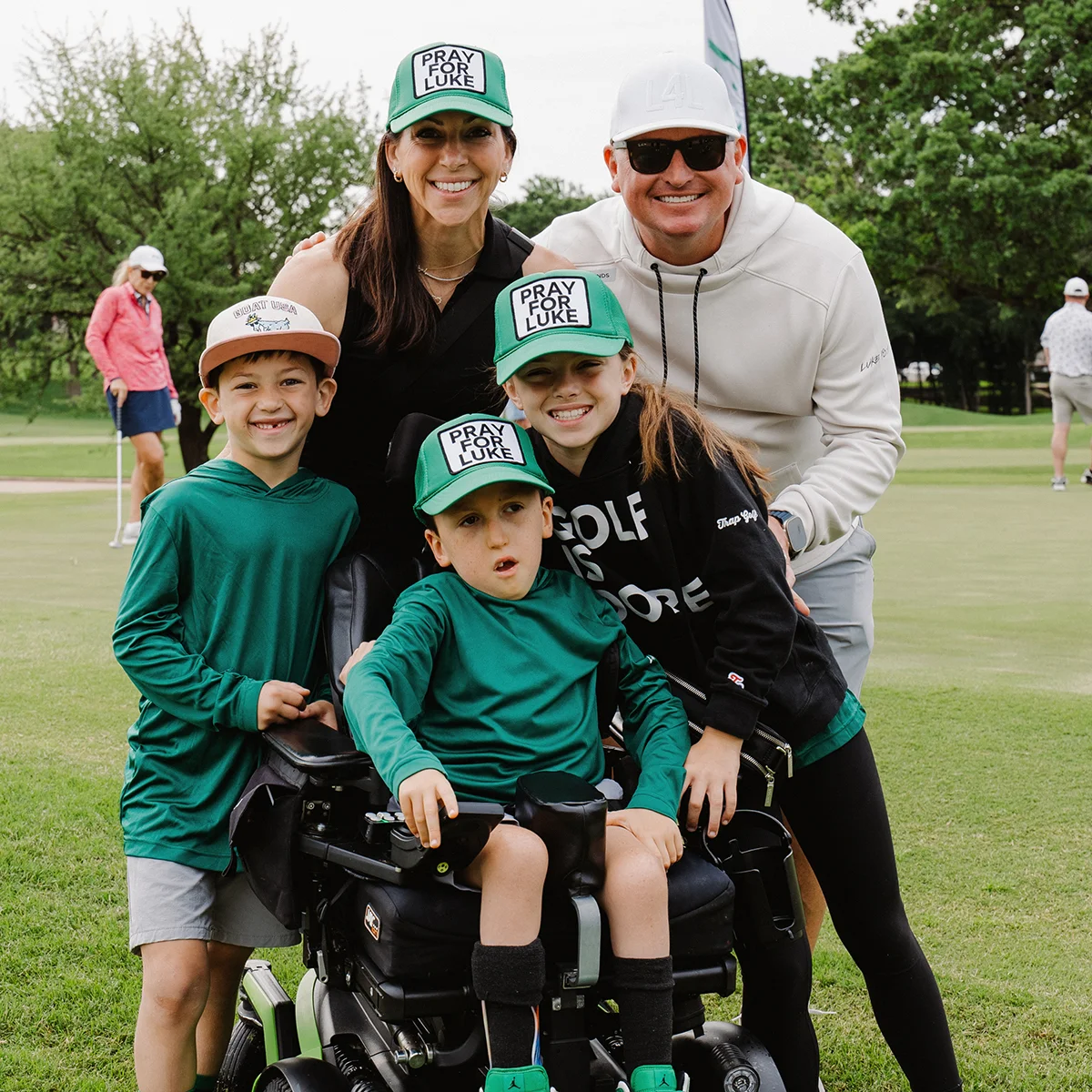
On January 1, 2017, Luke was admitted into the emergency room at Dallas Children’s Medical Center after days of intense and persistent stomach breathing. After a call to the after-hours nurse on duty, we were instructed to take him in immediately. While being examined in the ER by the doctor, we discussed some additional concerns about Luke’s overall development delays. He was over 5 months old and did not roll over, do tummy time or have very good neck control. It was observed and confirmed that Luke had poor tone and would need to be seen by the neurology team the following day. The team of neurologist that examined him has serious suspicion of a neuromuscular disease called Spinal Muscular Atrophy. If gone untreated, most children with Type 1 died before the age of 18 months old. As we sat in the hospital room that day digesting the possibility of this life changing new, Luke’s overall health continued to decline. He went from a regular room at the hospital to the ICU for 8 days where he received the necessary support to keep him breathing. While in ICU, Luke was treated for RSV, pneumonia and a collapsed lung. Despite the odds, Luke survived the hospital stay. Blood work was drawn while in ICU and it was confirmed that Luke had SMA Type 1 on January 12, 2017. Before December 23, 2016, there was not an approved treatment for this disease. However, the FDA approved the first and only treatment for SMA called Spinraza. Luke was fortunate to begin treatment on February 21, 2017 at Cook Children’s in Ft Worth, Texas where he was the first commercially dosed patient. While his long-term prognosis is unknown, we are hopeful that with a treatment and continued advances in research we will find a cure for what was once called the most hopeless disease.
SMA is a terminal and degenerative disease that causes weakness and wasting of the voluntary muscles in infants and children. Specifically, the disease is caused by a missing gene known as the survival motor neuron gene (SMN1), which is responsible for the production of a protein essential to motor neurons. Without this protein, lower motor neurons in the spinal cord degenerate and die. As the motor neuron network breaks down, the ability of the brain to control muscles diminishes and with less control and use, muscles weaken and waste away. Simply, SMA eventually impacts every muscle in the body hindering the ability to walk, sit, stand, eat, breathe, and swallow.
Approximately 1 in every 40 people are carriers of the disease and 1 in 10,000 babies born each year and roughly 1 in every 10,000 babies are born with SMA. With the newly approved treatment, the SMA community has hope. Our organization is committed to raising awareness about SMA, advancing funding for research, and providing education and support to individuals and families that have been affected by this disease.
